Monday, August 8, 2011

"The Roof of the World"- Tibetan Adventure


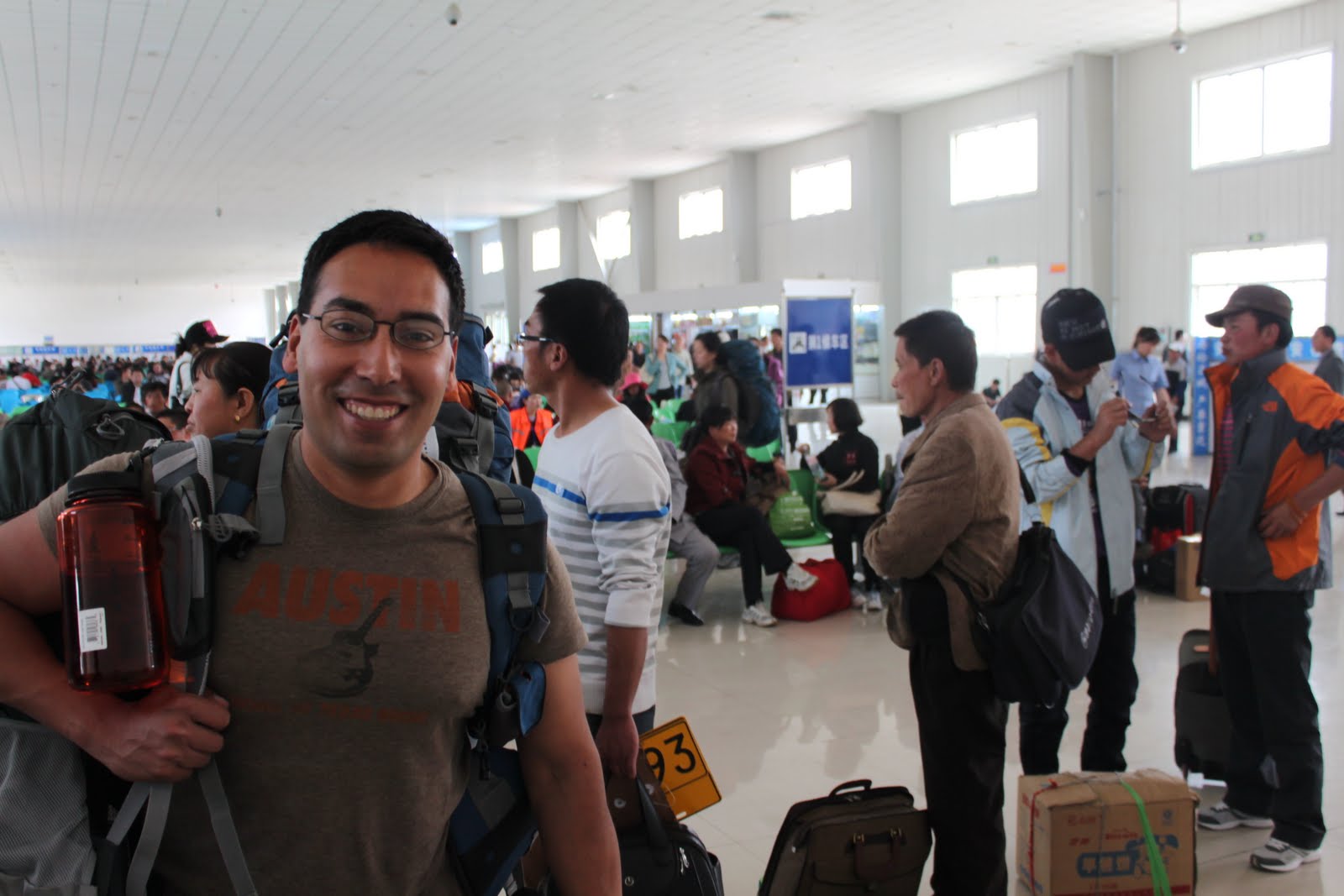
Arriving at the train station in Lhasa after 24 hours of amazing views.

I’m finally putting pen to paper on my Tibetan adventure. My trip to Tibet was a truly adventurous experience. I traveled with a couple of other travel partners. Our trip was about 15 days and it began with a flight from Beijing to Xining in the western Qinghai Province. From Xining we took the famous Qinghai-Tibet railway to Lhasa. In Lhasa we met our guide and driver and trekked southwest through Tibet to Mt. Everest Base Camp and then north toward Mt. Kailash. After Mt. Kailash we headed back down south across the Himalayan mountain chain into Nepal and descended down into Kathmandu. Our final leg was a flight from Kathmandu back to China. Upon arrival I immediately felt like we were on the far edge of China’s western frontier. However this was just the beginning of an adventure that would take us to the far reaches of western China and beyond.


Tasty cuisine of noodles and peppers just outside Xining in a small village.

We spent a couple of days in Xining. Xining, the provincial capital of Qinghai, is the largest and most modern city in Qinghai province. It lies on the eastern edge of China’s western frontier and serves as the gateway to the Qinghai-Tibet Plateau. The city’s geography reminded me of the American southwest. The climate was cool and arid. The surrounding mountains were barren however the city center was green with trees and plant life. Upon arrival to Xining I could sense a cultural difference that what I had become accustom to in Beijing. The people, the accents, and the general feel was much different. It was less crowded and more laid back. The city had a youthful and eco-friendly feel to it. We stayed in Xining a couple of days. We stayed at the Lete Youth Hostel which was surprisingly clean and had a nice cozy bar. While in Xining we visited the Kanbula Qinghai Geological Natural Preserve and the Qinghai Provincial Museum. The museum was less than impressive but the geological preserve offered some great views of a large lake which lies at the upper reaches of the Huangshui River, a major tributary of the Yellow River, and the surrounding mountains.
On day three after touring the city we made our way back to the hostel, gathered our bags, and headed for the train station. I was especially excited about the train ride from Xining to Lhasa.
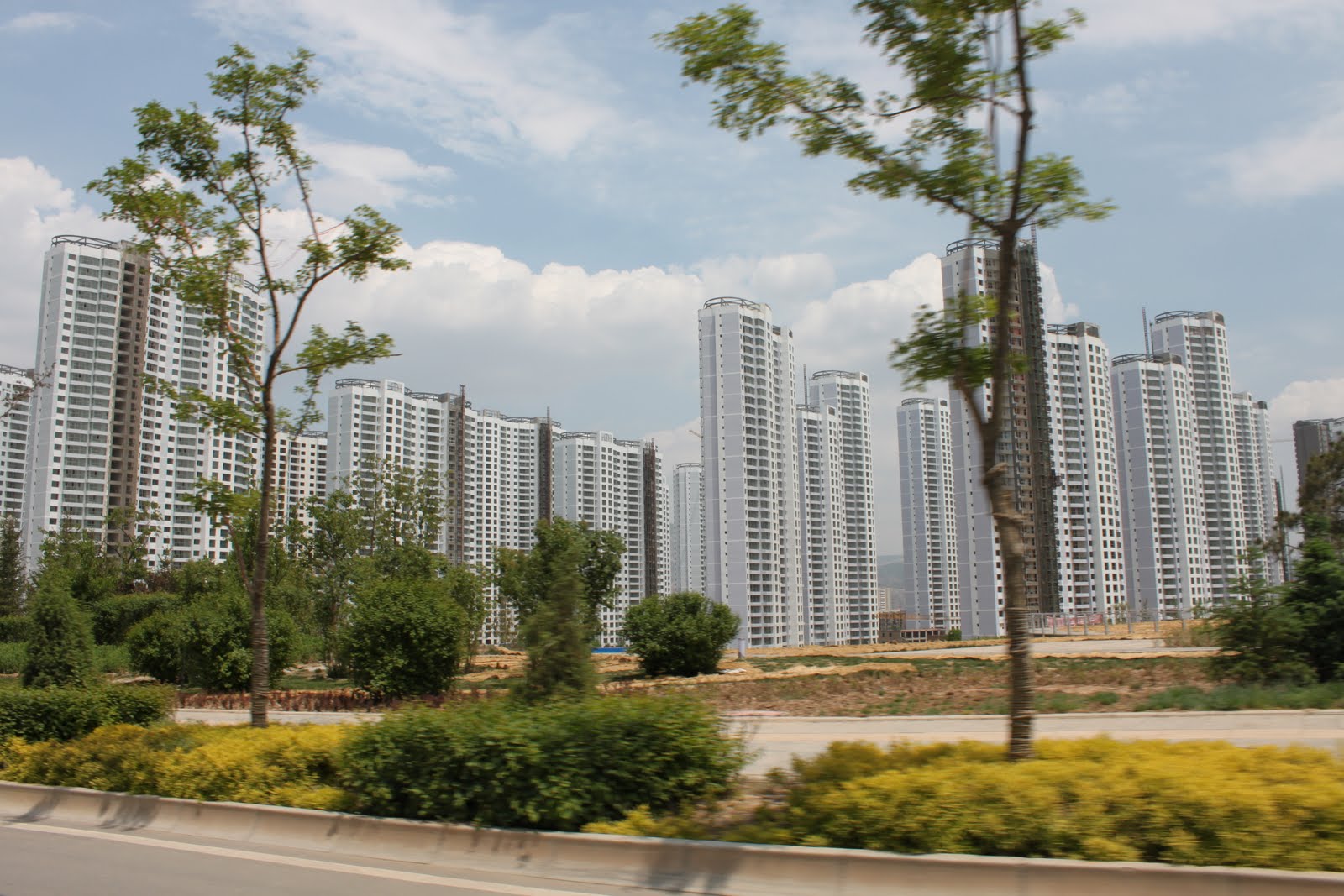


Newly developed area of Xining near Xining East Railway Station.


Qinghai National Geological Preserve.


The highly sophisticated and world-famous Qingzang (Qinghai-Xizang) railway as it is known in Chinese was completed in 2006. This is the highest operating rail line in the world reaching over 5000m at the Tangula Pass. The 24-hour transit from Xining to Lhasa was a lot of fun. The scenery was majestic and the train service and facilities are among the best in China. Taking the train is such a culturally important part of living in China. I met people from all walks of life both Chinese and foreigners. Some people were on vacation while others were heading west for work. We met three friendly gentlemen who were sharing our hard-sleeper berth with us. We had some great conversation and speaking practice. We had dinner in the dining car with one of the guys. Sharing a meal, some beer, and chatting with this Chinese guy who was on his way back to Lhasa for work was an awesome cross-culture experience. The entire train ride experience was so exciting that I found it hard to sleep. I was constantly staring out the window at the breathtaking views. The sheer nothingness and vastness of the Tibetan Plateau was amazing. Every stretch of track presented a breathtaking panoramic of the plateau. The next morning the train attendant pulled open the shades to expose snow capped mountains and frozen tundra with flows of ice cold water. Now I really felt like we were on the edge of the earth. The nothingness was extraordinary.


Xining East Railway Station.


Getting settled in for the 24 hour train ride to Lhasa.


The standard Chinese beer, peanuts, and tomatoes.


Travel buddies.


Sunrise during day 2 on the Qingzang Railway.


Ascending the Tibetan Plateau.


Panoramic views on the Qinghai-Tibet Plateau.


Frozen permafrost near Tangula Pass.


Hanging out in the dining car just a few hours from Lhasa.


Lhasa Railway Station.

When we arrived in Lhasa we were met by our guide and driver at the train station. All travelers are required to arrange travel to Tibet via a travel agency. From time to time Tibet is off limits to tourists so plan accordingly if you plan to visit. We stayed in Lhasa for about four days. Located in eastern Tibet Lhasa is one of the most elevated major cities in the world. During our four days in Lhasa we visited local sites to include Potola Palace, Barkhor Square, and Ganden Monastery. Lhasa’s society and culture remain heavily influenced by Tibetan-Buddhism. Daily life revolves around traditional religious practices which include circumambulation and prostration in Barkhor Square and around Potola Palace. The practicing Tibetan-Buddhists are extremely devout. Hundreds maybe thousands of people each day would simultaneously circumambulate the city and prostrate. The people’s faces and clothes were black from the dirt on the streets. They would drop down to their knees and then stretch in to a laying position on their stomachs and then back to their knees and back to standing. They would continue this for hours.
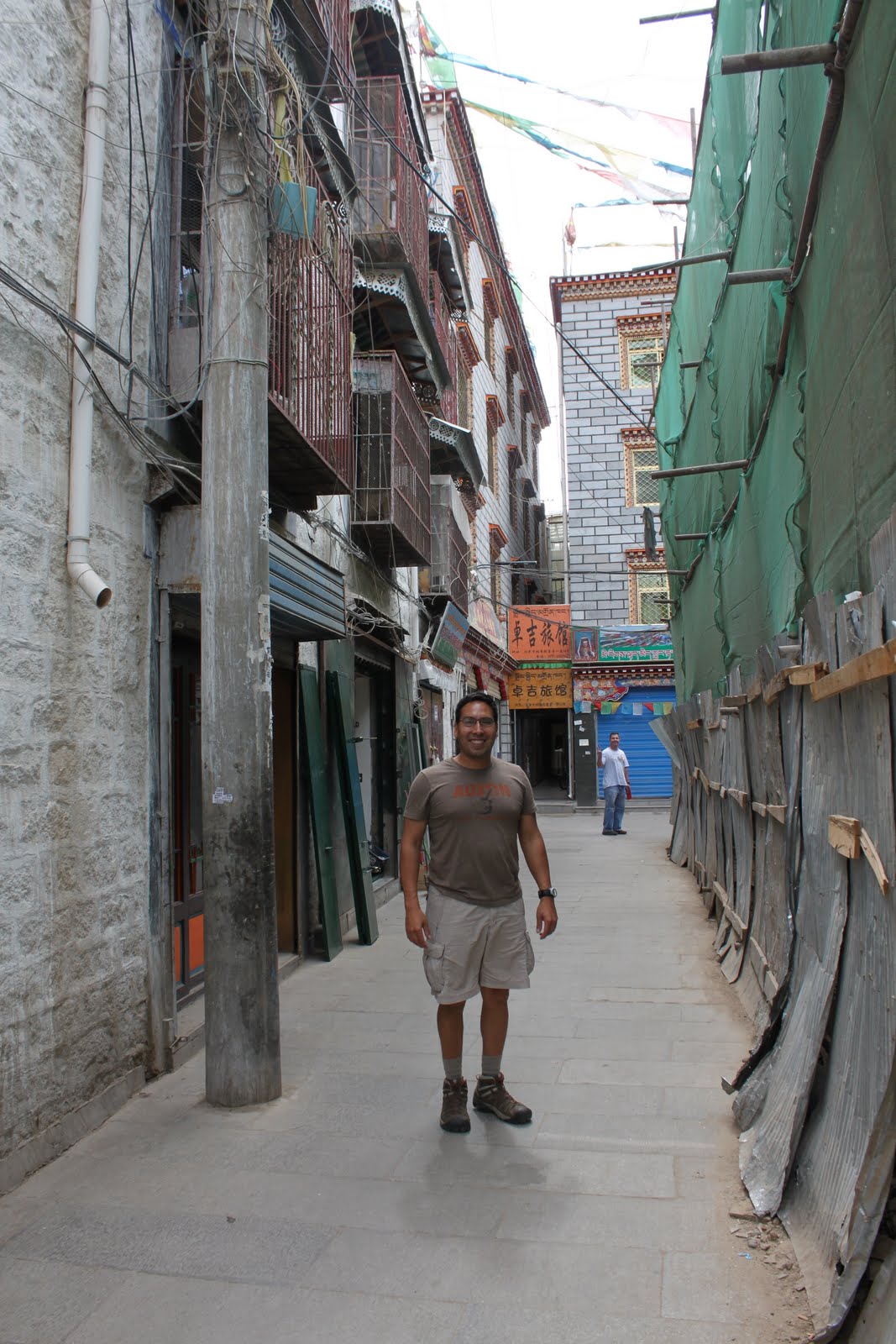


Backstreets of Lhasa.


Partaking in some local cuisine on a Lhasa sidestreet.


Portola Palace was impressive. It sits another 500m above Lhasa. Locals continuously circumambulate the city and the palace.


Lhasa was the first point during the trip in which there was a challenge to communicate with the local populace. I was still able to use Mandarin-Chinese however communication was limited. The majority of the populace spoke Tibetan (Zangyu) and dialects of Tibetan. The majority of the youth in the city spoke very good Mandarin.


An old man praying on his way to the top of the palace. Tibetan's believe they need to make the pilgrimmage to Lhasa at least once during their lifetime.


Our tour guide Lobsong.
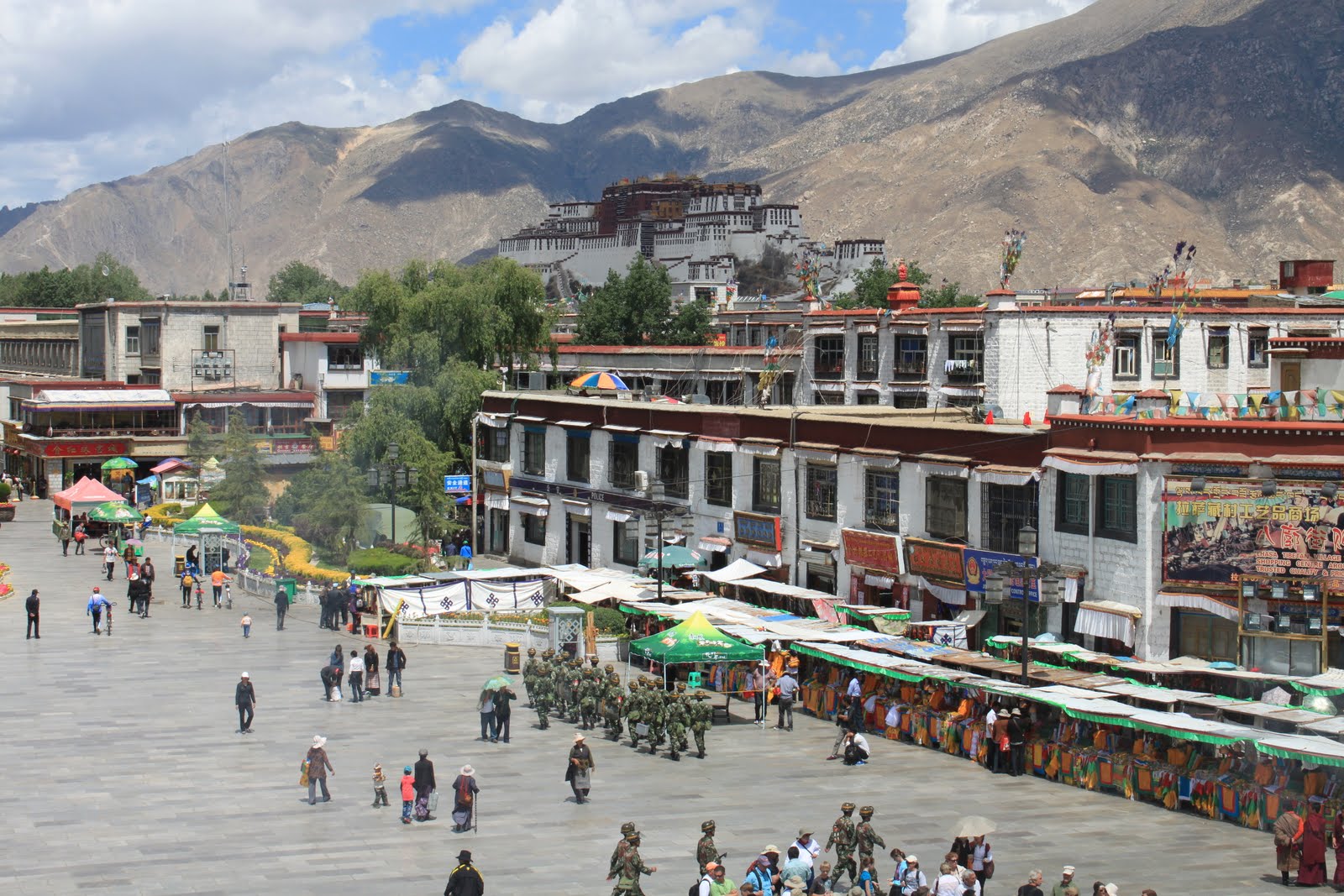


Overlooking Barkhor Square, Lhasa's spiritual center, with Portola Palace in the background.


Locals prostrating outside the monastery in Barkhor Square.

The city of Lhasa was an amazing sight. The city center is dense with markets and full of people carrying out their religious practices and tourists. There was a visible security presence. Police and military regularly patrolled the streets and there were various guard posts throughout the city. In light of the apparent heightened security and strong religious influence Lhasa has a growing nightlife. There seemed to be a large number of Han Chinese youth frequenting cafés, bars, and nightclubs. Though there is considerable development Lhasa still retains its mystical atmosphere.


On the roof of "the roof of the world" enjoying some delicious yak, curry, and rice.


The market.


Why did the ram come to market?


Ganden Monastery an hour outside of Lhasa.


Rare picture inside the monastery.


This stone pillar at the southwest corner of Barkhor Square holds an interesting piece of history. Engraved on the stone is an ancient agreement between Tibetan and Chinese empires acknowleding each others sovereignty and vowing to refrain from acts of war against one another.


Purchasing Mandala art at a shop in Lhasa.


The third phase of the trip started once we departed Lhasa. It consisted of five days of 9 hours or more traveling overland in an SUV. We stopped in four towns on the way to our final destination of Darchan at the base of Mt. Kailash. During this part of the trip we traveled southwest through Tibet and then northwest skirting the Himalayan mountain range toward Darchan. This portion of the trip had the most breathtaking views and the most desolate and treacherous transit routes of our entire trip. From the amazing view at Kora La Pass at over 5000m and the turquoise blue Yamdrok Lake to the massive glaciers just beyond and continuing on to Mt. Everest’s North Face, the sights of central and western Tibet were breathtaking.
The Qinghai-Tibet Plateau climate is one of the most extreme regions in the world. At Everest Base Camp we reached our highest elevation of the trip at above 5200m and temperatures were near freezing at night. Much of the highlands and mountains in the region have snow or ice-cap year round. At our furthest northwest point of Darchan we experienced falling snow. I began to feel the effects of altitude in Lhasa however once we reached Everest Base Camp I was more fatigued.


Tibetan Mastive and a baby goat.


The temperature dropped rapidly as we reached the glacier. The baby goats are warm and tasty. When we reached Mt. Everest Base Camp and continued further north I would come to miss that goat.


Routine traffic patterns.


5000km from Shanghai.


Once we departed Lhasa there was little development and infrastructure. Xigatse was the most developed town that we traveled through in western Tibet. According to our guide the city was nothing more than a small village 15 years ago. After a decade and a half the city is almost entirely under construction. We stayed the night in Xigatse and departed the next morning. After hours of off-road travel we reached the town of Saga.


After Saga we headed for Darchan. The town of Darchan is tucked in against the base of Mt. Kailash. This was the furthest northwestern point of our trip. The majority of the population lives an extremely hard life compared to western standards. However this hard way of life did not appear to stem from poverty. Traditional practices, the harsh terrain and climate, and the influence of Tibetan-Buddhism contribute to a way of life on the Tibetan Plateau that has continued for thousands of years. The people are conditioned to endure extreme temperatures, intense sunlight and wind, and high-altitude. I was amazed at how physically hard the people of western Tibet were. They were also welcoming and friendly to foreigners. As we moved further and further west it became more difficult to communicate in Mandarin-Chinese. The majority of the locals spoke a local dialect that was even different than the Tibetan spoken in Lhasa.


Traveling through western Tibet provided insight into and highlighted a myriad of challenges which China and Tibet face. In regard to modernization Tibet still lacks the infrastructure to support the rapid development and influx of visitors to Lhasa and western Tibet. Modernization already appears to pose environmental challenges. This was most evident in areas heavily traveled by tourists such as Mt. Everest Base Camp. It was evident that a lack of waste management infrastructure directly contributed to pollution of the run-off from the Himalayan ice-caps.


Pictures from Mt. Everest Base Camp


Fortunate to catch a glimpse of the North Face.


Our fourth phase of the trip consisted of a 3-day drive from Darchan back overland to the China-Nepal border. We backtracked skirting north of the Himalayas through Saga and then on through Nyelam, Zhangmu, and Kathmandu. Once we reached the friendship highway which stretches from the border back east to Lhasa the drive was considerably smoother. We ascended the friendship highway to Thang La pass at 5150m which would be our final ascent of the trip. At the pass we stopped to take photos and catch our last views of the snow capped Himalayas. Then we began our descent down through Nyalam toward Zhangmu. As we descended the landscaped turned lush green and the steep gulch was lined with water-falls. The tropical lush green scenery was a surprising change to the previous two weeks of traveling through arid mountainous plateau. The descent from the border on to Kathmandu continues along the river lined with mountain valley towns and green vegetation. The fourth phase of our trip was a completely different experience than the first and second phase. Nepalese and Indian influence was more predominant. As we reached Nyalem in western Tibet there was a feeling of moving toward civilization. This was different from the transit from Lhasa to Darchan as the generally feeling was moving away from civilization toward more and more desolate conditions.


Local boy in Darchan below Mt. Kailash.


On our way back near Lake Manasavorar.


About 40km outside the town of Saga. This family seemed like they didn't see many other people. They warmed up to us after a few minutes.


Amazing views. It felt like we were driving into the sky. This is near the Himalayan mountain pass before descending toward Nepal.


Zhangmu is a small colorful border town carved into the face of a deep gorge descending into Nepal. The majority of the town was comprised of hostels, hotels, restaurants, and markets. There seemed to be a considerable amount of Nepalese people living and working in Zhangmu. At the border there was a heavy flow of Nepalese into Tibet and primarily tourists and Nepalese flowing into Nepal. Most interesting was the long chain of Nepalese with extremely large bundles of supplies and goods on their backs with the majority of the weight supported by a strap on top of their head. These long human chains easily carried hundreds if not thousands of pounds. Many of the women also carried their babies in a basket around their neck or on top of their head. They transported tanks of propane, bags of flower or rice and other products.
Zhangmu has a strong Nepalese influence. The people in Zhangmu resembled people living across the border in Nepal more than the people of Tibet or Han Chinese. Many of the dishes were curry and rice based and more typical of Nepalese or Indian cuisine.
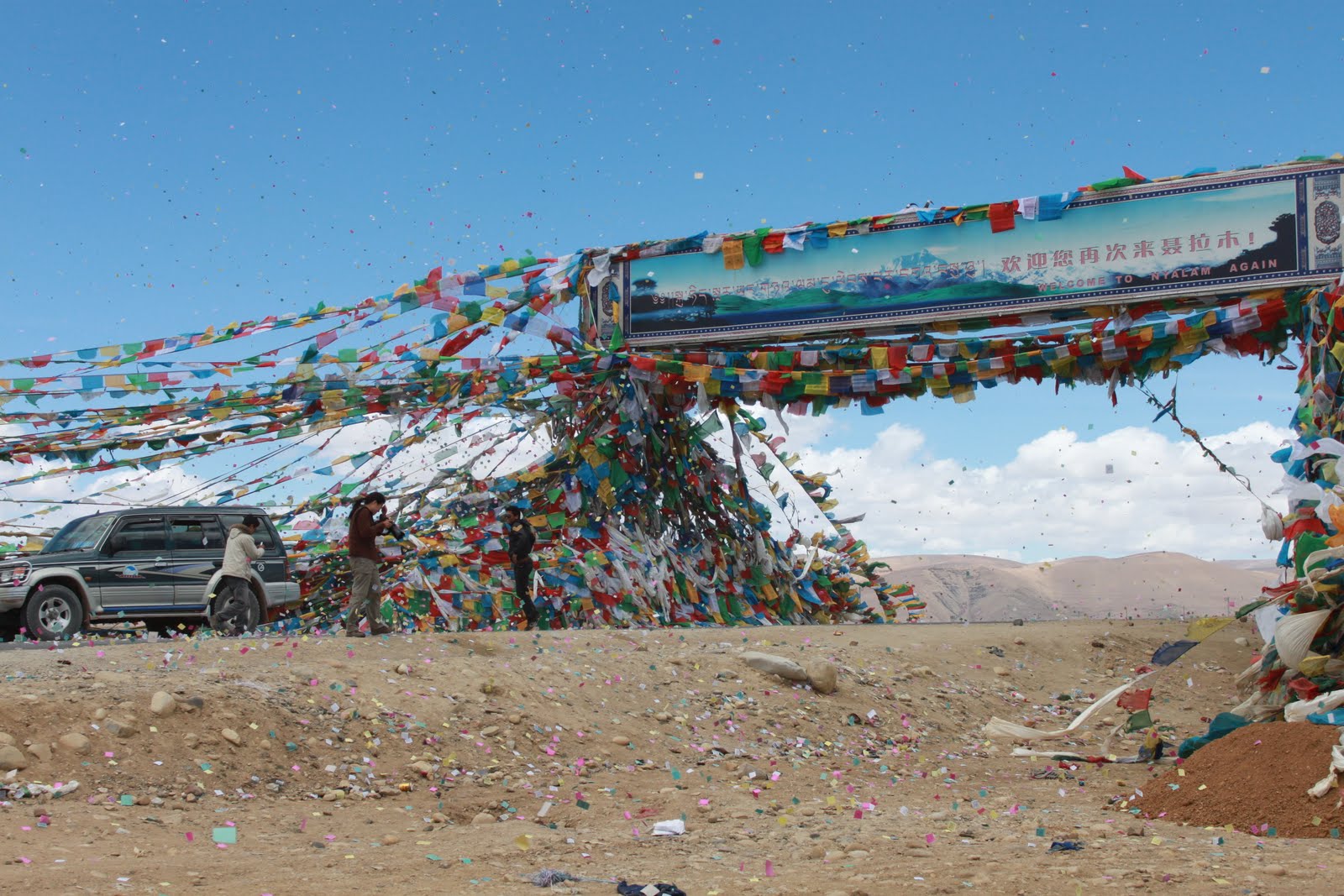


The colorful border town of Zhangmu. Not much reminded me of China.

The descent into the tropical climate of Nepal was a delightful surprise as was the Nepalese and Indian style food consisting primarily of rice, curry, and lentils. Kathmandu with its dense population and dated traffic system was lively and mildly chaotic. The hustle and bustle of commerce and the city’s markets was quite the experience and livelier than Lhasa or anything else I previously experienced in China. Travelers are not only drawn to the mystical city of Kathmandu but hikers come to Kathmandu as a start point for trekking and biking tours into the Himalayas. I would recommend spending at least 2-3 days exploring Kathmandu.


Great view from our hotel in Zhangmu.


Streets of Kathmandu.


Overlooking Kathmandu.

Below I posted some lessons learned and important notes to consider for anyone traveling to the Tibet-Qinghai Plateau region and Nepal:

1. Confirm with travel agency refund policies and contingencies for cancelled activities or changes in schedule.
2. Note the time change in Nepal of 1hr and 15 min.
3. Nepal visa can be obtained at the Nepal border using RMB. No photo required for an additional fee.
4. Overland travel west of Lhasa is a test in physical endurance. Much of the trip is off-road. Be prepared for long-distance (over 9hrs) over rugged terrain.
5. Due to travel restrictions you will incur additional fees when crossing check-points in central and western Tibet.
6. Weather and temperature regardless of time of year is volatile in this region of the world. Be prepared for both high and low temperatures.
7. Do not underestimate the effects of altitude.

Sunday, July 24, 2011

It's Beijing Belly Season

Sonny and I are working on our Tibet and Mongolia blogs (unfortunately running into hiccups getting photos uploaded).  But while we keep you waiting for our latest travel updates, I thought I'd take a minute to paint a picture of the local summer landscape here in Beijing.

If you don't know already, although Beijing is moving at lightning speed to global modernization, the locals in Beijing have a ways to go still in the areas of hygiene.  If you've been following my blog, you've already seen the squat toilets with NO toilet paper, soap, or running water to wash hands.  You've probably also heard me talk about the toddlers who walk around in split pants and literally go to the bathroom whenever and wherever they desire....subway cars included, people! 

But on the lighter side of the SHoCKING local culture and mannerisms lies what I've been calling the "Beijing Belly".  It emerges as soon as the weather turns hot and humid, and when the wind ceases to cool anything off.  The men of Beijing of all shapes and sizes see it fit to roll up their shirts to fully expose their "washboard abs".  Corporate office types and construction laborers alike find it perfectly appropriate to walk around with their bellies exposed for all to see.  Short, tall, fat, thin, in shape, or not, anything goes when the men of Beijing just need to cool themselves off.

I was amused to find our English newspaper in China, China Daily, has coined the same term for my summertime discovery here in Beijing.  See the video link here for their story on Beijing Bellies

So folks, next time you're a little overheated and need a quick and practical way to cool off, just roll that shirt up and be proud of the tummy God gave you...or think at least think about it anyway.

Friday, July 1, 2011

Watch out China, Momma's learning Chinese!

Sorry everyone for neglecting the blog for so long!  I actually have a decent excuse this time.  I have just completed my first full week of formal Chinese lessons!  I'm taking classes at the same place my husband is enrolled, called TLI (Taipei Language Institute).  For now I'm just going twice a week, but it's already making a big difference. I've been picking up so much just from passive listening around the city, but to get a handle on the basic sentence structures and vocabulary is now helping me put together the basic phrases I need to get around.  Don't get me wrong, I don't have high hopes for picking up serious character recognition skills, but if I can acquire survival conversational Chinese it'll be much easier getting around town by myself.  So wish me luck!  So far, so good!  Lessons are taught one-on-one, so it's very intense and participation is a MUST!  For any China FAO's looking to enroll in TLI, remember that you can roll over extra hours to your spouse without paying any additional fees.  I was able to take some of Sonny's hours because a FAO leaving the country recently gave her extra hours to Sonny.  It's worth asking whatever school you plan to attend whether or not spouses can benefit from hours not used. I am basically taking classes for free, what could be better?  Below is the best photo I could find on the internet, but here's also a link to the school's website to see all that they offer (even dance, cooking, and caligraphy classes available).
http://www.bjtli.com.cn/

 VERY low-resolution photo of TLI  I found off the internet, will post a better photo later.

If you're wondering how I got the time to get away from home to go to school, and where the kids are during all this time, I guess it's time for the latest on our newest addition to the family.  Her name is Sun Ayi, and she's a 50-something housekeeper/nanny whom we hired about a month ago.  The word Ayi literally means "aunt", and and Ayi typically works in the household doing anything from cleaning, to grocery shopping, to looking after the children, laundry, cooking, ironing....sounds amazing, right???  We found our Ayi from a US Embassy family leaving China and looking to find Ayi a new family. 

Our main reasons for hiring an Ayi were 1) to expose the kids to Chinese in the home, not only when we go out in the city.  Sun Ayi does not speak any English, so needless to say it's a challenge for all of us (except maybe Sonny) but it was exactly the kind of force-feeding that the kids and I need.  The other reason was 2) to give Sonny and I an opportunity to do things in Beijing that are difficult to do with kids and to also give us some alone time if we want to go out to eat or go sightseeing.  The opportunity arose for me to take classes at TLI, and we jumped at the chance to enroll me!  I definitely regret NOT taking classes at DLI in Monterey when Sonny's Chinese class was open to spouses, so I wasn't about to let a second chance pass me up. 

So far I have nothing but great things to say about Ayi.  She is a natural with our kids, and although Isabelle can take advantage of the language barrier on occasion and sneak a treat from the snack drawer even when Ayi is telling her not to, Ayi takes it in stride and is very patient with both Isabelle and Jacob.  And they adore her!  I have to say though, the moment I sort of fell in love with her was the day I was sick with the flu, Sonny was in Tibet, and she took the kids to play at our building's playground and playroom all day while letting me sleep.  Not only that, but that evening before she left she made a MEAN chicken noodle soup-Chinese style!  She's fitting in just fine!

To other families moving to Beijing soon, I would highly recommend looking into hiring an Ayi, especially if you have children.  For our specific program, in which  we're only here for a year, I've found that having an extra pair of hands around the house really helps us get more done, faster.  Not only that, but there really is alot of historical sight-seeing to do around town that the kids really aren't always going to be enthused about, so it could really free up some time for the adults to go out and see parts of Beijing that they otherwise might have not tried to do.  And last but not least, Ayi's are extremely affordable, whereas hiring a private nanny in the U.S. is nearly impossible to sustain for a military family.  That's a pretty good selling point for me, especially now that I see how protective our Ayi is of our kids and how seriously she takes her job.  That's why I really would more or less consider her a part of our family now.  The US Embassy releases a weekly newsletter called The Great Wall Gazette, and in it are classified ads where Ayi's are listed for hire, and they usually come highly recommended by their previous Embassy Staff employers. Another great source is Beijing Cafe, which is a yahoo group of Beijing Expats where classified ads, job listings, and other general info from other residents is posted and shared for others to see.  You can expect to find it easier to hire an Ayi in the summertime, as most expats are moving in and moving out of the country at that time and the number of Ayi's looking for work sharply increases.  If you're in Beijing or coming to Beijing soon and thinking about going this route, feel free to shoot me an email if you have any other questions or recommendations.

Hope everyone's summers are going well!  Enjoy the weather, the break from school, the upcoming vacations, and know that while we miss home, we are really having a great time!  And also, thank you so much to our family and friends who have sent us care packages.  The kids especially love opening up packages from home, and weve gotten so much great stuff that we really have put to great use!  So thank you guys, you know who you are!  We love you!

Sunday, June 19, 2011

Happy Father's Day!

Sorry folks for neglecting the blog for so long!  I really had hopes of blogging more when Sonny was in Tibet, but the kids and I were sick most of the time he was gone, and that meant we really didn't get out of the house much.  But we're all healthy now, Sonny is home from his trip, and we were able to have a quiet and relaxing Father's Day.
The kids woke up early, as they ALWAYS do, so I took them downstairs to the Starbucks to pick up some coffee and pastries so Sonny could get a few more minutes to sleep in.  We've done ALOT of eating locally and staying away from the western franchises as much as possible, so this was a big treat for everyone!  For the most part, making your way through a starbucks in Beijing is no different than the states.  The baristas speak excellent english, and I think part of the business model in China is to make Starbucks accessible to the both the expat and local community without changing a thing.  I feel sort of at home in a Starbucks, same soothing coffeehouse music, decor, smell of roasting coffee, sound of the espresso machine whipping up the milk....LOVE IT! 
Later on we had lunch with a friend who is leaving China and she took us exploring yet another neighborhood market we hadn't been to.  It's a grouping of large warehouses that are sort of organized by what the vendor sells, from produce, to beauty products, clothing, office supplies, you name it!  I have to remember this place, as it's the closest thing to a "one stop shop" I've seen out here.  If there's one thing I miss the most after living in Beijing, it's being able to hop in my SUV and drive to Target to pick up EVERYTHING I need.  Nowadays it's carrying the groceries home several blocks, buying only what you can comfortably carry.  And you can forget buying everything you need in one store.
After spending the morning walking around the market, I took the kids to the pool and had them down for their naps while Sonny got a pedicure....a much needed pedicure, especially after all that time in Tibet!
For dinner, we tried a trendy place right outside our apartment building called 1949.  It's a courtyard style grouping of 4 restaurants that share a common bar area in the center.  It's nothing like the hole in the wall family style reastaurants we've been trying for weeks.  This place definitely caters to the western folks, and I'll probably bring visitors here for a taste of the higher end.  We've walked by before and the atmosphere has always been very peaceful and it seemed like a perfect time to try it. 
The restuarant we chose was called the Noodle Bar.  We had the kids with us, and they aren't too picky when it comes to eating noodles.  We watched as the men behind the bar hand pulled our noodles to order, and served them with beef tenderloin and radishes.  Sonny sprung for the spare ribs and abalone, and we ordered some sauteed kale as a side dish.  It was very relaxing and delish, not to mention conventient.  When I say it's right next to our building, I mean it....you cross the street after walking out our door and you are there.  We'll definitely have to try the other 3 restaurants in 1949.
We really had a great day, and to top it off, we were able to talk to both sets of parents to wish our dads happy father's day.  Our kids really couldn't have better grandparents, and we miss them all so much!  Enjoy the pics below of our tim eat 1949.
On our way out the door


Isabelle posing at the front gate of 1949


Isabelle gets a little tired of smiling for me

There's my girl!

One of the other restaurants in the courtyard, Duck de Chine...best known for their Peking Duck


Sonny using his mad Chinese skills to order for us


The boys were fascinated by the noodle-pulling

Chefs at work

Pulling the noodle dough

Jacob was pretty excited

more noodle-pulling


Isabelle doing what she does best at restaurants...drawing a picture


my smiling boy

kids playing in the courtyard


Daddy and babies

1949 also has an art gallery.  This is one of many pieces in the outdoor gardens.


On our way home from a fantastic dinner. Happy Father's Day to all you dads out there!  You are loved!